• Skip to main content
  • Skip to navigation
  • Accessibility
  • Contact Us
Government of Western Australia Crest
Government of Western Australia
Government of Western Australia Crest

Additional Menu

  • Accessibility
  • Contact us
Go to WA Government search
  • About SMHS
    • Health Service Board
    • Strategic focus
      • Vision and values
      • Strategic Plan
      • Acknowledgement of Country
      • Annual Report
      • Child Safeguarding in SMHS
      • SMHS Cancer Plan 2024–34
      • Multicultural Action Plan
      • Equity, diversity and inclusion
      • Environmental sustainability
      • Innovation
    • Executive
    • Conduct and standards
    • Freedom of Information
    • Governance
    • SMHS Excellence Awards
    • Pulse
    • Contact SMHS
  • Our services
    • Our hospitals
    • Elective surgery
      • Contracted medical practitioners
    • Outpatients
    • COVID-19 information
      • SMHS staff self-reporting
    • Aboriginal health
    • SMHS Mental Health
      • Lived experience
      • SMHS-wide mental health services
      • Fiona Stanley and Fremantle Hospitals
      • Peel and Rockingham Kwinana
      • SMHS mental health referrals
      • Work for us
      • Building for the future
      • Bindjareb Mental Health Collective
    • Health promotion
      • Our priorities
      • Public health planning
    • Community Services
      • Home Hospital
      • Older Adult Health Hub
    • Health care snapshot
    • SMHS Online Services Portal
    • Western Australian Limb Service for Amputees
    • Library and Information Service
  • Our care
    • Safe, quality care
      • Reduce your falls risk
      • Preventing pressure injuries
      • Supporting patients with cognitive impairment
      • Understanding delirium
      • Hand hygiene
      • MySay healthcare survey
      • Healthcare associated infections
      • "What matters to you?"
    • Understanding where you will receive care
    • For overseas visitors and students
    • Patient rights
    • Patient stories
    • Private patients
    • Support for carers
      • If you can't visit an older patient
  • Our community
    • Consumer experience
    • Partnering with consumers
      • Community advisory councils
      • 'Put it to the People' engagement platform
    • Engaging with our community
      • GP Engage
      • Fiona Wood Public Lectures
      • Voluntary assisted dying podcasts
      • Health Stories podcasts
    • Disability access and inclusion
      • DAIP strategies
      • DAIP initiatives
      • Supporting people with disability
    • Pulse
    • SMHS HealthReady Pipeline
      • About HealthReady
      • Get involved in HealthReady
      • Current HealthReady projects
    • Our volunteers
  • Our research
    • About research at SMHS
    • Current research
      • Allied Health Research Unit
      • Nursing and Midwifery Research Unit
    • Our research stories
    • For researchers
      • SMHS Research Integrity Advisors
    • Participate in our research
      • Valuing the consumer voice
  • Work with us
    • Career opportunities
      • Aboriginal workforce
      • Allied health and health professionals
      • Clinical academics
      • Corporate and non-clinical careers
      • Medical
      • Mental health
      • Nursing and midwifery
    • Employee benefits
    • Apply for a job
    • Living in WA
  • News
  1. Home
  2. News
  3. 2026
  4. 11
  5. 06
  6. WA-led research gives hope for better recovery after stem cell transplant

WA-led research gives hope for better recovery after stem cell transplant
WA-led research gives hope for better recovery after stem cell transplant

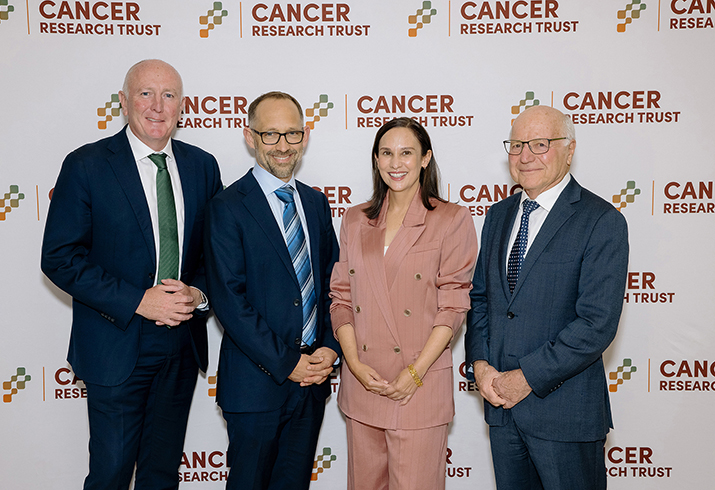
Four people standing in front of a Cancer Research Trust branded media wall Four person (l to R) - Minister Medical Research, Stephen Dawson, QUOKKA Chief Investigators Duncan Purtill and Allison Barraclough and Cancer Research Trust Director Peter Leonhardt.
06/11/2026

Fiona Stanley Hospital researchers have secured $5 million for, QUOKKA, a research project aiming to develop more personalised post-transplant care for people with acute myeloid leukaemia (AML).

The funding is provided through the Cancer Research Trust's WA Collaborative Cancer Research Grants program, co-funded by the WA Government’s Future Health Research and Innovation Fund, with the potential investment reaching $9 million based on the projec's progress.

Led by Dr Duncan Purtill, Dr Allison Barraclough and Dr Stephanie Lam, QUOKKA will bring together clinicians, researchers and patients from WA and the United States to develop more personalised approaches to post-transplant care for people with AML.

The research will investigate targeted donor cell therapies tailored to each patient’s immune needs. By better understanding why immune recovery differs between patients following transplantation, the team hopes to accelerate recovery and improve long-term outcomes.

Stem cell transplantation offers many AML patients their best chance of survival, yet we still don't fully understand why some people recover well while others experience relapse or serious complications, Dr Purtill said.

"By combining WA's world-class transplant expertise and uniquely collaborative research environment, the QUOKKA team is on a mission to improve the current standard of care for AML patients globally.

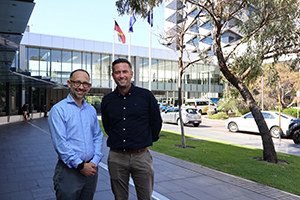
For patients like Trent, the WA-led research program offers hope of better recovery following stem cell transplantation.QUOKKA Chief Investigators Duncan Purtill with patient Trent Lister standing outside Fiona Stanley Hospital

His acute myeloid leukaemia (AML) diagnosis came completely out of the blue.

The 38-year-old father of two was fit, active and still running and playing sport when a mild cold quickly developed into severe pneumonia.

After driving himself to the emergency department as a precaution, Trent was diagnosed with pneumonia and AML within hours.

"It was a shock. I had no signs or symptoms. I was a healthy person and nobody in my family has had anything like this, Trent said.

"I also remember the incredible medical team that broke the news to me and described the plan and the journey that I would likely go through.

I knew immediately that it would be a long road, but I was in the best hands possible and that I could survive.

After treatment for pneumonia and intensive chemotherapy, Trent transferred to FSH for consolidation chemotherapy and an allogeneic stem cell transplant.

His sister travelled from Melbourne to be tested as a potential stem cell donor and was found to be a match.

For Trent, research aimed at improving recovery following stem cell transplantation offers hope that other patients facing blood cancer will have an even better chance of returning to the people and lives they love.

"It means that people who have a similar illness to me will have a better chance of surviving and continue to be able to enjoy their lives with their friends and family. It's brilliant, Trent said.

"I also think that this grant is fantastic recognition for the haematology doctors in Western Australia who are doing incredible work, day in and day out.

Importantly, this significant investment is another exciting research funding success for SMHS, reflecting the expertise of our FSH Haematology team and the support of our SMHS Research team in securing the funding and progressing this important work.

Keep up to date with our news and achievements

Find out more on Facebook (external site) or LinkedIn (external site)


Previous Next
Last Updated: 06/11/2026
  • Facebook
  • LinkedIn
  • YouTube

Footer menu

  • wa.gov.au
  • Copyright
  • Disclaimer
  • Privacy
  • Sitemap
  • Contact Us

Brought to you by the Department of Health, Western Australia

© Government of Western Australia 2018 to